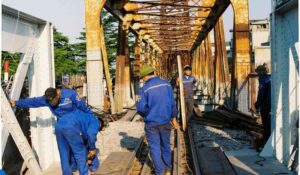
The Public Private Partnership Appraisal Committee (PPPAC) has cleared six railway projects covering approximately 647 km for implementation under the Hybrid Annuity Model (HAM), marking Indian Railways’ first major adoption of the model. The projects comprise four railway lines in Odisha and one each in Telangana and Jharkhand, with the objective of attracting private investment while retaining operational control with Indian Railways. The projects await Cabinet approval, with bidding expected in 2027–28 and construction proposed to commence from April 2028.
The projects were initially considered under a revenue-sharing and subsequently a Design, Build, Finance, Operate and Transfer (DBFOT) framework. Following market feedback, the projects were restructured under HAM to address concerns regarding the allocation of traffic and revenue risks. Under the proposed arrangement, Indian Railways will contribute 40% of the bid project cost during construction, while the concessionaire will finance the remaining 60%, which will be recovered through annuity payments with interest after commissioning. Separate payments will be made for operation and maintenance.
Unlike conventional railway concessions, Indian Railways will retain responsibility for operating trains, providing rolling stock and crew, and collecting freight revenue. Accordingly, traffic and tariff risks will remain with the Railways, while the private concessionaire will undertake construction and maintenance of the railway infrastructure over the concession period. The six projects have a combined bid project cost of approximately ₹15,976 crore and an estimated capital cost of ₹40,866 crore over concession periods ranging between 17 and 19 years.
The adoption of HAM also introduces contractual considerations concerning construction quality and lifecycle maintenance. Since the concessionaire will be responsible for both construction and subsequent maintenance, the concession agreement will need to establish effective quality certification mechanisms, meaningful performance deductions, adequate equity lock-in requirements and enforceable handback obligations. These measures are particularly relevant where construction-stage payments and financing arrangements could otherwise reduce the concessionaire’s long-term exposure to asset performance.
The railway-specific operating structure also creates potential interface risks between the concessionaire and Indian Railways. Since train operations, rolling stock, maintenance blocks and railway safety functions remain under the Railways’ control, the concession agreement will need to clearly allocate responsibility for delays, service interruptions and infrastructure unavailability. Commentary on the model has also highlighted the importance of coordinated commissioning procedures, defined maintenance access and effective dispute resolution mechanisms.
The adoption of HAM in railway infrastructure represents an expansion of the PPP framework beyond the highways sector. Its effectiveness will depend on appropriate risk allocation, robust concession agreements and an assessment of its value for money against conventional Engineering, Procurement and Construction (EPC) procurement, including the costs of financing, maintenance, construction delays and lifecycle defects.